
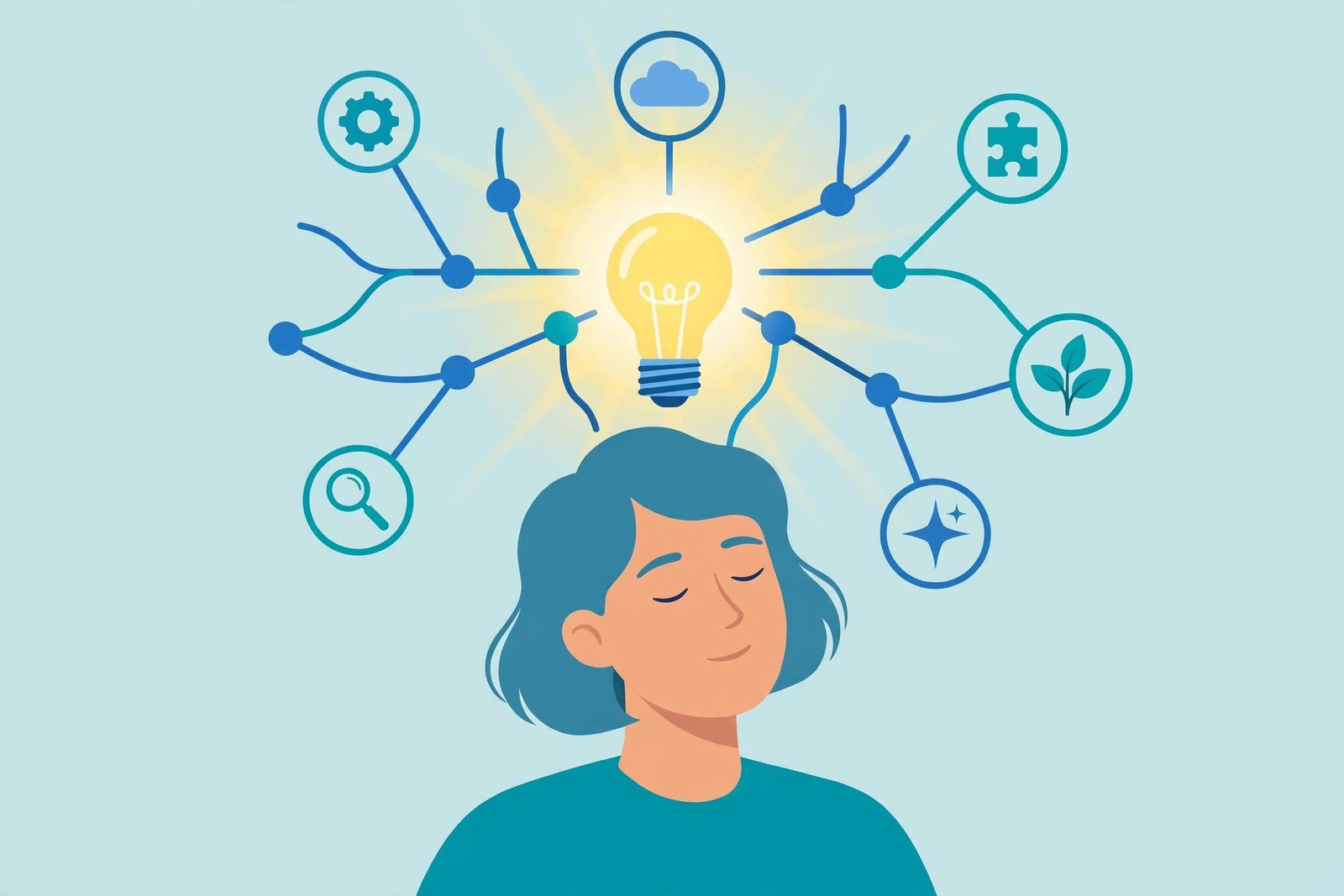
Some tools help you work faster. Others help you think better. Think technologies belong to the second group: apps and systems that support planning, learning, remembering, and deciding. They do not do the thinking for you. They give your thinking a place to happen.
If you want a shorter list first, the Tech 5 shortlist covers five picks worth trying this year. This guide goes wider: what think technologies are, how they help, and seven tools worth trying if you want a clearer head in 2026.
What Are Think Technologies?
Think technologies are tools designed to support the mind’s work. A note-taking app holds your ideas so you can stop carrying them in your head. A mind-mapping tool shows how ideas connect. An AI assistant helps you explore a question from different angles. The common thread is support: the tool carries the load so your brain can do the part only it can do.
The best think technologies share one trait: they get out of your way. You open the tool, put the thought in, and move on. If a tool needs a manual and a setup weekend, it is not helping you think — it is giving you a second job. Good think technologies stay out of the way and let the thinking happen.
This is different from tools that automate a task. An automated tool does the job for you. A think technology helps you do the job better. The distinction matters, because the two kinds of tools are judged differently: automation is judged on speed, thinking tools on clarity.
A good test for any tool is the notebook test. If a paper notebook would do the same job, the app needs to earn its place by adding something paper cannot: search, sync, or reminders. Tools that pass the test stay. Tools that fail it are just a notebook with a battery.
How Think Technologies Help You Every Day
The first benefit is memory. Human memory is good at ideas and bad at details. Writing a thought down frees your mind to have the next one. People who take notes during a meeting remember more of it — not because they re-read the notes, but because writing forced them to pay attention.
The second benefit is structure. A messy problem becomes easier when you can see its parts. A list, a map, or a simple outline turns a vague worry into a set of small steps. That is why planning tools feel calming: they replace a fog with a shape.
The third benefit is better decisions. When you can compare options side by side — costs, risks, benefits — you choose with evidence instead of gut feel alone. Gut feel still matters, but it works best when the facts are in front of you.
The fourth benefit is focus. A thinking tool gives your attention a place to go. Instead of holding five half-formed ideas in your head, you put them in the tool and work on one at a time. The others wait patiently instead of shouting for attention. That is why a simple list can feel so calming: it turns a crowd of thoughts into a queue.
Focus also improves when the tool removes decisions. A daily note template, a fixed review time, a single inbox for ideas — each one removes a small choice, and the saved choices add up to real attention. Simple think technologies protect your attention by removing small decisions.
7 Tools That Count as Think Technologies
Here are seven tools that fit the idea, from the simplest to the most advanced. Each of these think technologies earns its place by making one kind of thinking easier.
1. A note-taking app
The starting point. One place for ideas, lists, and meeting notes, synced across your devices. If you remember nothing else from this guide, start here.
2. A mind-mapping tool
Mind maps turn a list into a picture. You put the main idea in the centre and branch out into smaller ideas. They are great for planning a project or untangling a complicated topic.
3. An AI chat assistant
Ask an AI assistant to explain a topic, argue the other side, or list the pros and cons of a decision. It is a sparring partner for your thinking. If you want to pick one, the ChatGPT vs Gemini vs Claude comparison breaks down the three biggest options.
4. A read-later app
Save articles and read them when you have time to think, not when they interrupt you. A read-later app turns random scrolling into a small library you actually use.
5. A habit tracker
Thinking well depends on sleep, movement, and routine. A simple habit tracker shows whether you are keeping the habits that keep your mind sharp.
6. A calendar with time blocking
Time blocking means giving each task a slot in your day instead of a place on a list. It forces you to decide what matters now and what can wait.
7. A focus timer
Work in short, timed bursts with real breaks between them. A focus timer keeps the work honest and the breaks real — no more “quick checks” that eat an hour.

Thinking Tools for Students
Students may benefit most from thinking tools, because their work is thinking. Notes, essays, exams, and group projects all reward clear structure. For students, think technologies turn scattered revision into a routine worth keeping.
For exam revision, the winning habit is simple: short notes written in your own words, reviewed a little at a time. A note app that syncs to your phone lets you review on the bus or in a queue. Ten minutes of review, repeated often, beats a long cramming session the night before.
For essays, start with a map, not a first sentence. Put the question in the centre and branch out into the points you want to make. The map shows you the shape of the argument before you write a word, and it shows the gaps where you need more reading.
For group projects, a shared doc and a task board keep everyone honest. Each person owns a part, the deadlines are visible, and nobody has to ask what is left to do. The tool does not do the work — but it stops the work from getting lost.
The student rule is the same as the general rule: one tool at a time, used daily, reviewed monthly. A student with a note app and a calendar they actually trust is ahead of a student with ten apps they never open.
Spaced repetition is worth knowing about. It means reviewing material at increasing intervals — after a day, then three days, then a week. Many note apps support it, and it is one of the few study methods with strong evidence behind it.
How to Pick the Right Ones
Start with one. The tool that fixes your biggest pain is the right first pick. If you forget ideas, start with notes. If you cannot decide, start with a comparison habit. One tool used well beats seven tools installed and ignored. The think technologies that suit you best are the ones you will open every day.
Keep the system simple. A note app, a calendar, and one thinking partner are enough for most people. Add a fourth tool only when the first three cannot do the job. A lean set of think technologies is easier to trust than a crowded one.
Review monthly. Open each tool and ask: did I use this in the last two weeks? If not, delete it. A lean set of tools is easier to trust than a crowded one.
Free or paid is a simple question. Use the free version until it stops you. The moment a limit blocks something you do every day — storage full, or a feature you need locked away — that is the time to pay. Paying before that moment usually buys features you never touch. And always check what the free version actually includes; some tools are generous, others are not.
Keep the receipts simple. One paid tool is easy to justify. Five paid tools need a review of their own. If a subscription sits unused for a month, cancel it. You can always resubscribe. Reviewing your think technologies each month keeps the set lean and useful.
Frequently Asked Questions
Are think technologies the same as AI tools?
No. AI tools are one kind of think technology, but the idea is wider. A paper notebook counts too, if it helps you think. The test is whether the tool supports your thinking, not whether it uses AI.
Do I need to pay for these tools?
Not to start. Every tool in this guide has a free version that covers the basics. Pay only when you hit a limit that actually bothers you.
Can these tools replace a good routine?
No. Tools support a routine; they cannot replace one. Sleep, breaks, and regular review matter more than any app.
How long does it take to see a difference?
About two weeks of daily use. The first week feels awkward. By the second, the habit starts to pay off and the tools fade into the background.
What is the simplest thinking setup?
A note app, a calendar, and a daily ten-minute review. Write down what matters, put the deadlines in the calendar, and spend ten minutes each evening clearing the inbox of ideas. That setup fits in one evening to build and serves most people for years.
The Bottom Line
Think technologies will not make you smarter overnight. They will give your thoughts a place to land, a shape to follow, and a record to revisit. Start with one tool, use it daily, and add a second only when the first earns its keep.

1 Comment
Pingback: Development Technologist: 7 Best Skills You Need in 2026