
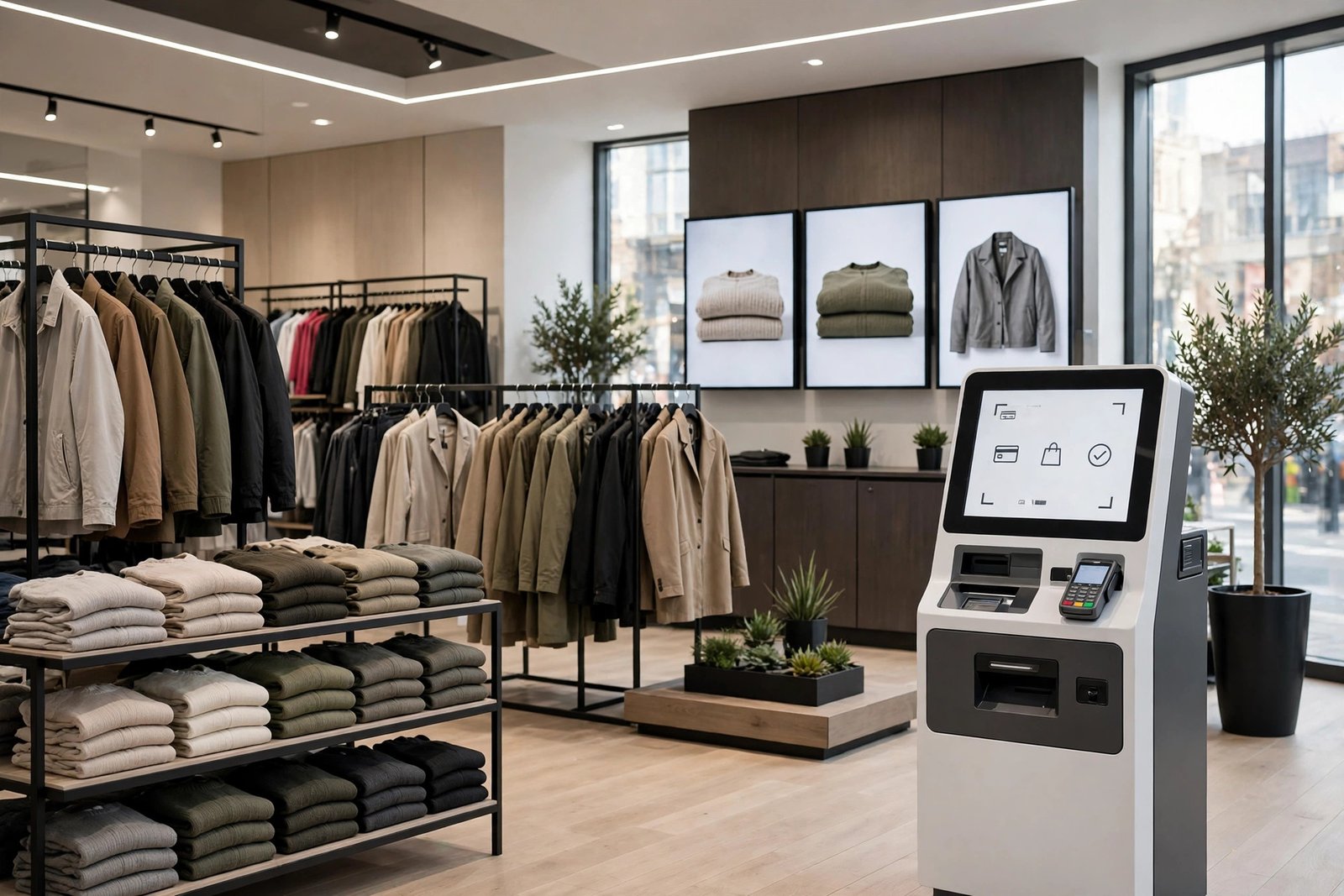
Walk into a clothing store today and you will notice things that were not there a few years ago. Screens that suggest outfits. Mirrors that show a different colour without you changing. Checkouts with no queue. Behind the scenes, even more has changed. This is retail technology at work, and it is reshaping both shops and online stores.
This guide explains the main tools in plain words: what they do, how they help shoppers, and where they still fall short. Whether you shop in stores or online, these tools are already part of your experience.
What Is Fashion Retail Technology?
Fashion retail technology is the set of tools and systems that shops use to sell clothes. It covers everything from the screen at the front of the store to the software that decides how many jackets to order. The goal is simple: sell the right clothes to the right people, with less waste and less waiting. In short, fashion retail technology connects the shop floor, the website and the stockroom into one system.
It is a broad field. Some tools face the shopper, like self-checkout and smart mirrors. Others work in the background, like stock software and demand forecasting. Together they form the modern retail system. A store that uses them well feels smooth: shelves are stocked, sizes are available, and checkout takes seconds.
The shift started online. E-commerce forced stores to get smarter, because shoppers could compare prices and check stock from their phones. Stores responded with tech of their own. Now the two sides are blending: you can order online and pick up in store, or scan a code in store and have an item sent to your home.
The Technology You See in the Store
The most visible change is at the front of the store. Digital screens show new collections and styling ideas. Some stores use smart mirrors in fitting rooms: tap the mirror to ask for a different size or colour, and a staff member brings it to you. No more getting dressed again to step out and ask.
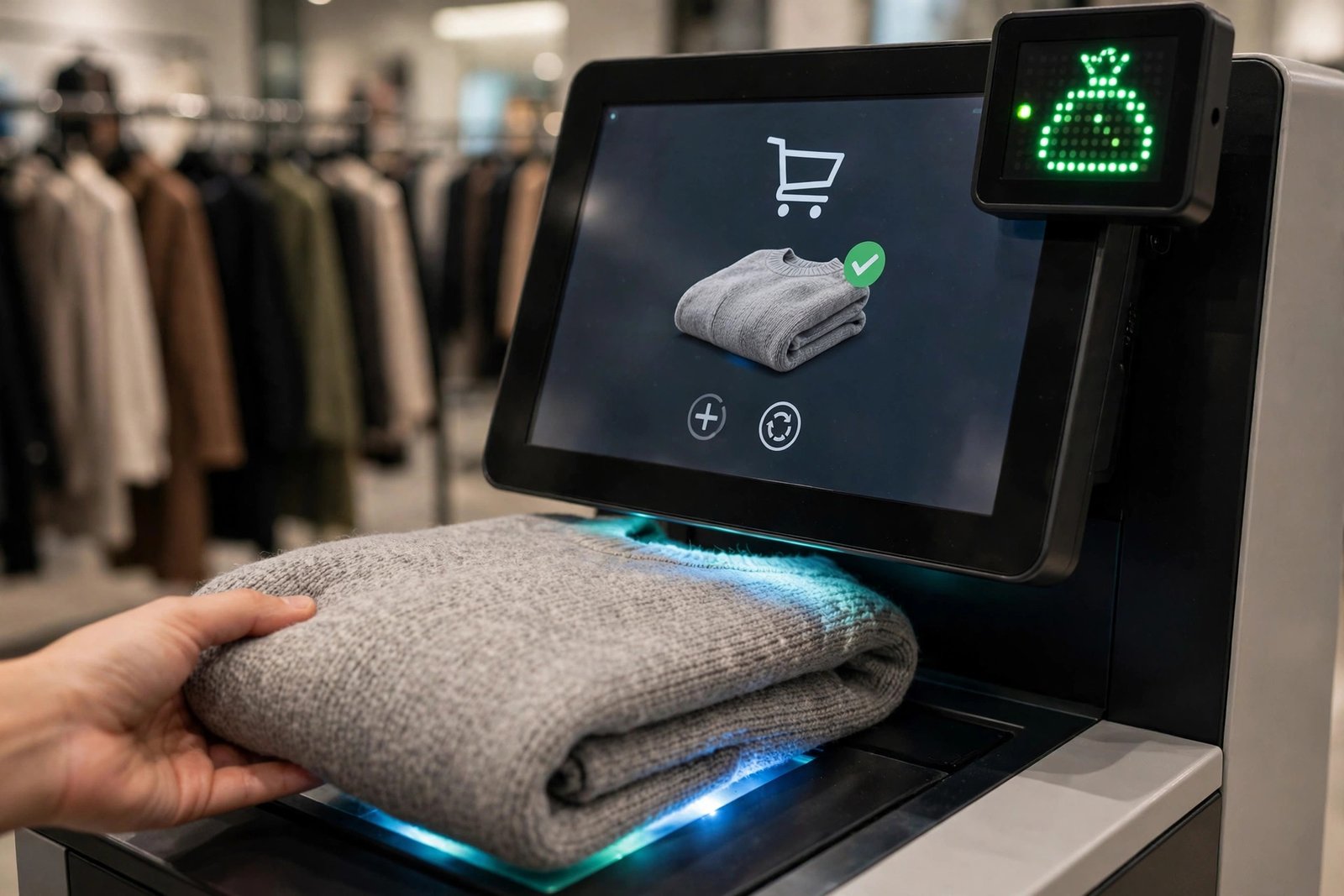
Self-checkout is spreading too. Scan your items, pay by card or phone, and walk out. It saves time at busy hours and lets staff help shoppers instead of standing at tills. Some stores go further with “just walk out” systems, where sensors track what you pick up and charge you when you leave. That is still rare in fashion, but it is coming. It is one of the most visible examples of fashion retail technology in everyday shopping.
Stock tracking has changed as well. Small tags on clothes let staff find an item in seconds, even if it is in the back room or another branch. If your size is not on the rail, staff can check the whole chain in a moment and have it sent to you. This is one of the most useful parts of in-store technology for shoppers, because it ends the old answer of “we don’t have your size”.
Fitting rooms are getting smarter too. Some stores let you book a fitting room from your phone and have your chosen items waiting inside. Others use lighting that shows how an outfit looks in daylight or evening light. These are small touches, but they make trying clothes on less of a chore.
The Technology Behind Online Shops
Online shops use a different set of tools. Search and filters are the basics: find a black dress in your size without scrolling through hundreds of items. Better shops now offer visual search — upload a photo and find similar items. Size guides have improved too, with some sites showing how a garment fits on models of different shapes. Good fashion retail technology makes that search feel effortless.
Chat support has moved from email forms to instant chat and virtual assistants. A good assistant can answer size questions, track an order, or start a return in seconds. The best ones hand you to a real person when the question gets tricky, instead of looping you through the same answers.
Personalised suggestions are everywhere now. “You may also like” is driven by what you viewed and bought before. Done well, it surfaces things you actually want. Done badly, it feels like being followed around the shop. The better sites let you control this and keep it useful rather than pushy.
Returns are the online shop’s biggest headache, and tech is tackling it. Prepaid return labels, drop-off points, and instant refunds on scan are now common. Some shops use data to warn you before you buy: “this item runs small, consider one size up”. That single line can save a return.
The 7 Tools That Matter Most
Seven tools show up again and again in modern fashion retail. Here they are in plain words.
Smart mirrors let you see an outfit in another colour or size without changing. They are useful in fitting rooms and on the shop floor, and they help staff serve you faster.
Self-checkout and mobile payment cut queues. Scan, pay, leave. Simple, and shoppers notice the difference at busy times.
Stock tracking tags tell staff exactly where an item is — on the rail, in the back, or at another branch. Fewer “sorry, we don’t have it” moments.
Demand forecasting software predicts what will sell and how much to order. It is not magic, but it beats guessing, and it means fewer empty shelves and less leftover stock.
Virtual try-on lets you see clothes on your own photo or a body model. It works best for simple items and is improving every year.
Customer apps tie it together: loyalty points, order tracking, store stock checks and personal offers in one place. A good app makes repeat shopping easier.
Data dashboards help store managers see what sells, what sits, and what to move. They turn gut feeling into clear numbers, which helps small shops compete with big chains.
These tools work best together. A smart mirror is nice on its own, but it is far more useful when it connects to live stock data and your size profile.
How Fashion Retail Technology Helps Shoppers
The clearest benefit is time. Faster checkout, quicker stock checks, and better search all save minutes. Those minutes add up, especially if you shop often. That saved time is one of the clearest gains from fashion retail technology.
Better fit is the second benefit. Size advice, fit notes from other buyers, and virtual try-ons all help you pick the right size the first time. Fewer wrong sizes means fewer returns and less frustration.
More choice is the third. When a store can check stock across all its branches, you are not limited to what is on one rail. When a website can show you similar items from a photo, you are not limited to what you can name in a search box.
Lower prices can follow too. When shops waste less stock and staff time, some of that saving reaches shoppers through sales and better prices. It is not a guarantee, but efficient shops have more room to offer deals.
There are trade-offs. Some shoppers find the tech cold or confusing. A store full of screens can feel less personal than a shop where staff know your name. The best shops use tech to support people, not replace them. Staff who can help you choose still matter more than any screen.
Challenges and What Comes Next
Fashion retail technology is not cheap to set up. Small shops often cannot afford smart mirrors or advanced stock systems. That gap is real, and it is why many small retailers start with simple tools: a good website, clear stock lists, and easy returns.
Privacy matters here too. Loyalty apps and personalised suggestions run on your data. Good retailers explain what they collect and let you opt out. If a shop is not clear about this, think twice before signing up.
The next wave is already forming. More stores will blend online and offline: order in the app, try on in store, and return by post. Fitting rooms will get smarter, with lighting and mirrors that show outfits in different settings. And behind the scenes, better forecasting will mean fewer wasted clothes and fewer empty rails. Fashion retail technology will keep blending the two sides of shopping.
For shoppers, the advice is simple. Use the tools that save you time or money. Ignore the ones that add noise. And remember that the best fashion retail technology is the kind you barely notice — it just makes shopping work better.
Frequently Asked Questions
What is fashion retail technology?
Fashion retail technology is the technology shops use to sell clothes. It includes in-store tools like smart mirrors and self-checkout, online tools like visual search and size advice, and back-office software for stock and forecasting. Its job is to make shopping faster, easier and less wasteful.
How does fashion retail technology help small shops?
It helps small shops compete by making stock, sales and customer service easier to manage. A simple website with live stock, a loyalty app, or a good returns system can make a small shop feel as smooth as a big chain. Small shops usually start with cheap, simple tools and add more as they grow.
Is smart mirror technology reliable?
Smart mirrors work well for showing colours and styles, and for calling staff for a different size. They are less reliable for showing exact fit, because fabric and movement are hard to fake on a screen. Treat the mirror as a helpful guide and try the real garment on before buying.
Does fashion retail technology replace shop staff?
No — the best shops use tech to help staff, not replace them. Screens and self-checkout handle simple tasks, which frees staff to give real advice, help with fitting, and solve problems. A shop with good staff and good tech beats a shop with only one of the two.
What is the future of fashion retail technology?
Expect more blending of online and offline shopping, smarter fitting rooms, better size advice, and less waste through better forecasting. The tools will get cheaper too, so more small shops will be able to use them. The goal stays the same: the right clothes, in the right size, without the wait.
The Bottom Line
Fashion retail technology is already part of how we shop, from smart mirrors and self-checkout to better size advice and faster returns. The tools that matter most are the ones that save time, improve fit, and cut waste. Shoppers do not need to understand every system — just use the ones that help and ignore the rest. As fashion tech startups keep building new tools, stores will keep getting smarter. And when you want a quick break from shopping, Baamboozle has free games to play with friends.

1 Comment
Pingback: Trend 2018: 7 Looks That Defined the Year