
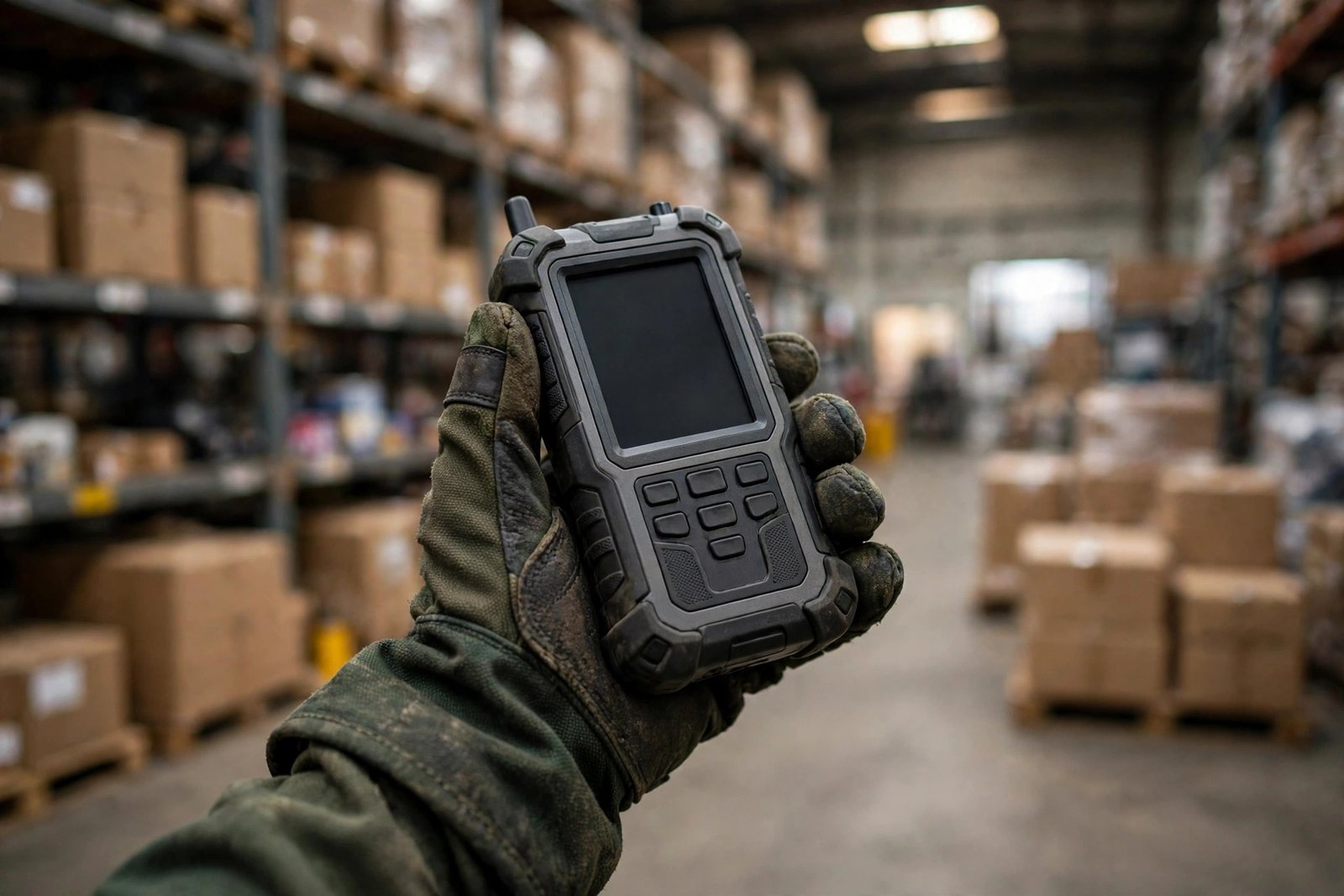
A normal phone breaks easily. Drop it on concrete, leave it in the rain, or use it with dusty hands, and you may be shopping for a replacement. A rugged mobile computer is built for the opposite life. It is a handheld device designed to survive drops, dust, water and rough handling while still running the apps a worker needs. A rugged mobile computer keeps working where a normal phone gives up.
You will see these devices in warehouses, on construction sites, in delivery vans and in field service work. They look chunky next to a slim phone, but that bulk is the point. Every part is protected, every port is sealed, and the screen works with gloves on.
This guide explains what a rugged mobile computer is, how it differs from a normal phone, who actually needs one, and what to check before you buy.
What Is a Rugged Mobile Computer?
A rugged mobile computer is a handheld device that combines a phone, a scanner and a small computer in one tough body. It runs an operating system, usually Android, connects to Wi-Fi and mobile data, and runs the same kinds of apps a phone runs. The difference is the body: thicker casing, sealed ports, a stronger screen and buttons that work in bad conditions.
Most models include a built-in barcode scanner. A warehouse worker points the device at a box and the item is logged in a second. Delivery drivers use them to record signatures and track parcels. Field engineers use them to read manuals, log repairs and order parts from the job site.
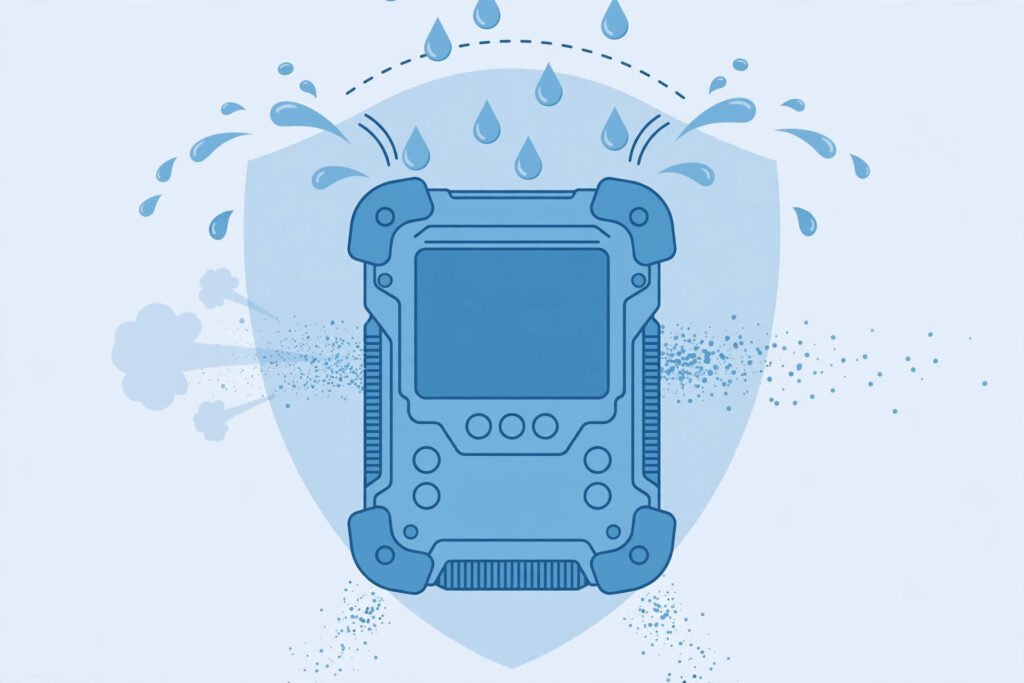
The devices are tested against standards that normal phones never meet. Makers drop them from a set height onto concrete, spray them with water, cover them in dust and run them in heat and cold. If a model passes, it earns a rating that tells buyers what it can handle. The most common ratings describe protection against dust and water, and resistance to drops and shocks.
Battery life is another key feature. A rugged device is expected to last a full work shift, often twelve hours or more, without charging. Many models have batteries the user can swap in seconds, so work never stops for a charger. For a long shift, a rugged mobile computer with a spare battery is hard to beat.
Rugged Mobile Computer vs Normal Phone
The biggest difference is toughness. A normal phone is built to look good and feel light. A rugged mobile computer is built to keep working after a fall. The screen glass is thicker, the corners absorb impact, and the body is sealed against dust and water. A normal phone in a tough case can survive a drop, but it is still a phone in a case. A rugged device is tough by design. That is the core promise of a rugged mobile computer.
The second difference is the tools built in. Barcode scanners, long-range readers and hot-swappable batteries are standard on rugged devices and rare on phones. A phone can scan a barcode with its camera, but it is slower and less reliable when the code is damaged or the light is poor.
Software is the third difference. Rugged devices often run a version of Android that is locked down for work: only approved apps, automatic updates, and remote control by the company IT team. That keeps the device secure and stops workers from installing games or personal apps that could cause trouble.
There is a trade-off. Rugged devices are heavier, thicker and usually more costly than a normal phone. The screen is smaller than a tablet, and the camera is often weaker, because the device is built for work data rather than photos. For office workers and casual users, a normal phone is the better choice. For people who work outdoors or in rough places, the rugged device pays for itself by not breaking.
If your work is normal office or home use, a regular smartphone is enough. A roundup of the best mobiles under 100,000 in Pakistan can help you compare everyday phones before you spend money on a tough device you may not need.
Who Needs One?
Warehouse and logistics workers are the main users. They scan, sort and track goods all day, and their device is dropped, bumped and used with dirty hands. A rugged device survives that life for years, while a normal phone might last a few months. A rugged mobile computer is the tool they reach for every shift.
Delivery drivers are next. They work in rain, heat and cold, and they need a device that records deliveries, takes signatures and shows the next stop. A dead or broken phone means missed deliveries and unhappy customers.
Field service engineers use them too. A technician fixing machines in a factory or on a farm needs manuals, parts lists and a way to log the job, often with gloves on and in poor light. A rugged device with physical buttons and a bright screen fits that work.
Construction workers, utility crews and emergency teams also rely on them. On a building site, dust and drops are daily facts. For police, fire and rescue teams, a device that keeps working in bad weather is not a luxury. It is part of the job.
Even some businesses outside these fields use them. A farm, a mine or a port has the same rough conditions, and a device that survives them saves money on replacements. Like the machines in usa technology vending, which also run all day in public places, rugged devices are built to work where normal electronics give up.
What to Look For Before You Buy
Start with the toughness ratings. Check the drop rating, the dust and water rating, and the temperature range. Match them to your real conditions. A device rated for light rain is not enough for a worker who stands in storms.
Check the scanner. If your work involves barcodes, test how fast and how reliably the scanner reads damaged or small codes. A slow scanner wastes more time than a tough body saves.
Battery matters. Look for a device that lasts a full shift, and check whether the battery can be swapped. A sealed battery means the device must charge during work, which is a problem on a long shift.
Think about the screen. It should be readable in bright sunlight and work with gloves. Physical buttons help when touch screens fail in rain or with dirty hands. A screen that is too small makes forms and maps hard to use. Gloves, rain and bright sun are no problem for a rugged mobile computer with a bright screen and physical buttons.
Finally, check software support. Ask how long the maker will provide security updates, and whether your company’s IT team can manage the device remotely. A tough device with no updates is a security risk after a year or two, no matter how strong the body is.
Care and Everyday Use
A rugged device needs less babying than a phone, but it still needs care. Clean the screen and the scanner window regularly, because dust on the lens slows down scanning. Check the seals around the battery and ports, and replace a worn seal before water gets in.
Keep the software updated. Updates fix security problems and improve the scanner and battery. Most companies push updates remotely, but if you manage your own device, check for them once a month. A rugged mobile computer is only secure when its software is up to date.
Use a lanyard or a holster. Even a tough device can be lost, and a holster keeps it within reach on a busy site. A screen protector is still a good idea: it is cheaper to replace a protector than a screen, even a strong one. A holster keeps a rugged mobile computer within reach and off the floor.
Train new users. Show them how to scan, how to swap a battery, and what to do when the device freezes. Five minutes of training saves hours of frustration later, and it keeps the device working the way it should.
Frequently Asked Questions
Is a rugged mobile computer the same as a rugged phone?
They are close cousins. A rugged phone is mainly a phone with a tough body. A rugged mobile computer adds work tools like a fast barcode scanner, a swappable battery and software built for business use. For scanning and warehouse work, the mobile computer is the better tool.
Can I use a rugged mobile computer as my personal phone?
Yes, most models make calls and run normal apps, but they are heavy and the camera is usually basic. Most people keep a normal phone for personal use and a rugged device for work.
How long do these devices last?
With normal work use, three to five years is common. The body often outlasts the battery and the software support, so check the maker’s update policy before you buy.
Are rugged devices waterproof?
Most are water-resistant, not fully waterproof. Check the rating: a common rating means the device survives rain and splashes, and some models survive a short dip. No rugged device should be used underwater on purpose.
The Bottom Line
A rugged mobile computer is a work tool, not a fashion item. It trades slim looks for a body that survives drops, dust and rain, and it adds the scanners and batteries that warehouse, delivery and field workers need every day. That is why a rugged mobile computer earns its place on the job.
If your job breaks phones, this device will save you money and trouble. If your work is mostly office and home, a normal phone is lighter, cheaper and better. Pick the tool that fits the job, and it will last.

1 Comment
Pingback: IT Stands for Computer: 7 Easy Facts Explained