
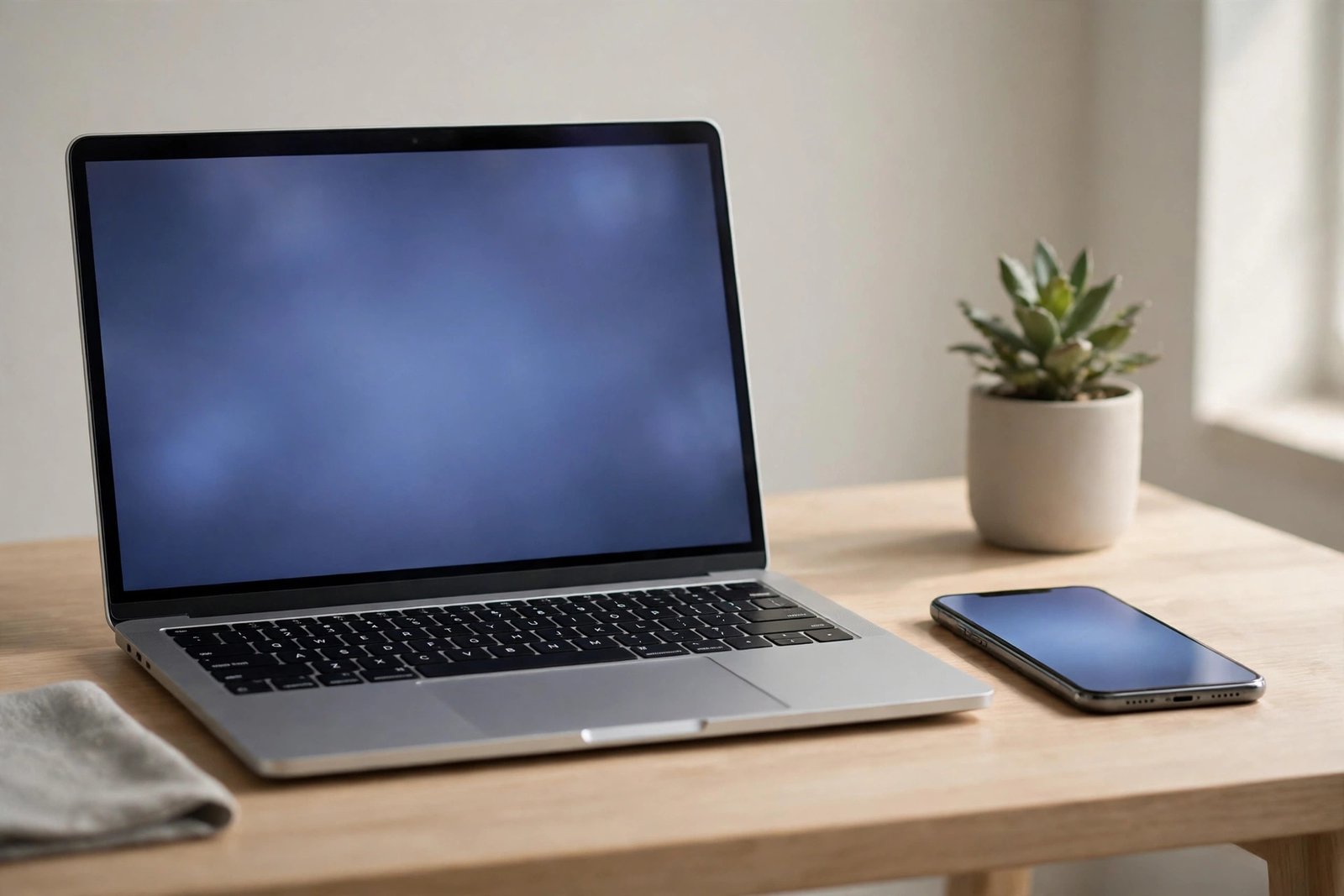
Most of us now own two screens: a computer and a mobile phone. We check email on the phone in the morning, finish the same email on the computer at work, and watch a video on the phone again at night. The line between the two devices has become very thin, and that is by design. Computer and mobile technology now works as one system rather than two separate worlds.
That change happened because the devices learned to talk to each other. Your photos, messages, notes and files can follow you from one screen to the other without cables or extra steps. You start something on one device and finish it on the other, and most of the time you do not even think about it. That is the everyday benefit of a computer and mobile setup.
This guide explains how computer and mobile devices work together, where they still differ, and how to get the most out of both. Whether you are buying your first laptop, picking a new phone, or just trying to keep your files in order, the basics below will help.
How Computer and Mobile Devices Work Together
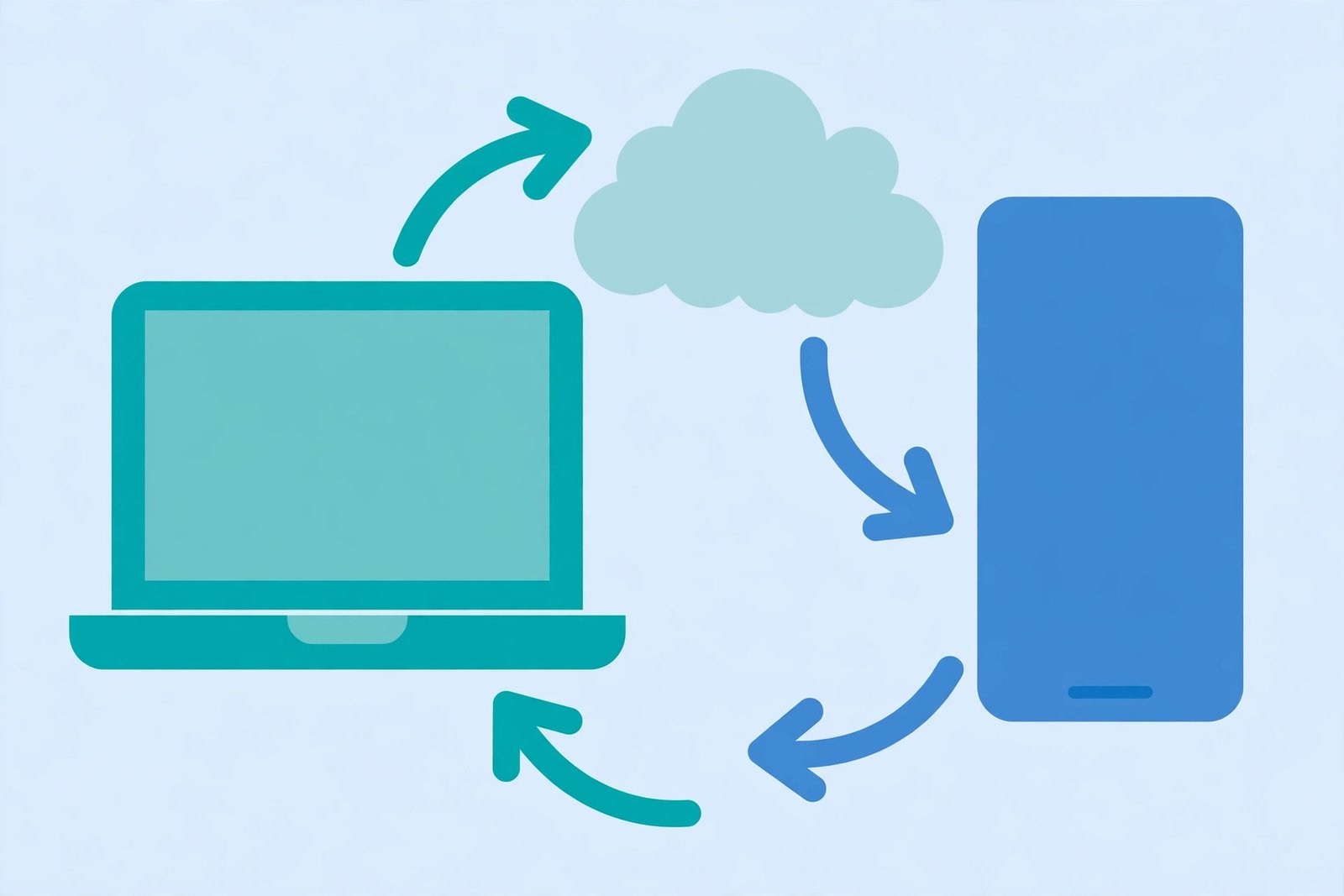
The trick behind this teamwork is the cloud. When you save a note, a photo or a document, a copy is stored online and synced to your other devices. Change it on your phone, and the updated version appears on your computer a few seconds later. The same happens in reverse. This computer and mobile syncing happens in the background.
Accounts make this possible. When you sign in with the same account on both devices, the system knows they belong to you. Your browser history, your contacts, your calendar and your app settings all travel with that account. This is why setting up a new phone feels so quick today: most of your stuff arrives by itself once you sign in. That shared account is what keeps your computer and mobile devices in step.
Some features are built for the pair. You can copy text on your phone and paste it on your computer. You can answer a phone call from your computer screen. You can start reading an article on one device and find it waiting on the other. These small links save more time than people expect. This is why computer and mobile makers now design their products as a pair, not as two separate gadgets.
The people who build these connections are often specialists who plan how software works across devices. A development technologist, for example, thinks about how an app should behave on a small phone screen and on a large laptop screen, and makes sure the two versions share the same data.
Computer and Mobile File Sharing Made Simple
Sharing files between devices used to mean cables and USB drives. Today it is mostly wireless, and there are several easy ways to do it. Computer and mobile file sharing is now built into most apps.
The simplest way is cloud storage. Apps like Google Drive, iCloud and OneDrive give you a folder that exists on every device at once. Drop a file into the folder on your computer, and it appears on your phone. The same works the other way around. Most services offer some free space, which is enough for documents and a fair number of photos.
Nearby sharing is another option. Modern phones and laptops can send files directly to each other over Wi-Fi or Bluetooth when they are close together. It is fast, it needs no internet, and it works well for large videos or batches of photos.
Email and messaging apps still work fine for single files. Sending yourself a photo or a document through a chat app is quick and reliable, though it is not the tidiest way to organise things. For a one-off file, though, it is often the fastest route.
Whichever method you pick, keep one habit: give your files clear names and store them in named folders. A file called “final-version-2” in a folder called “Invoices 2026” is easy to find on any device. A file called “IMG_4829” in a random folder is not.
If you are shopping for a new phone, it helps to know what is available in your budget. A roundup of the best mobiles under 100,000 in Pakistan is a good starting point for comparing models before you buy.
The Main Differences Between Them
Even though they work together, a computer and a phone are still built for different jobs. The computer has a bigger screen, a full keyboard and more power. That makes it better for writing long documents, editing photos and videos, and working with several windows at once.
The phone wins on portability and speed of access. It fits in your pocket, wakes up instantly, and has a camera ready at all times. For quick messages, maps, payments and photos, the phone is the natural choice.
Battery life is another difference. A phone is designed to last a full day on one charge, while a laptop usually needs charging after several hours of heavy work. Tablets sit in the middle, which is why many people use one as a second screen.
Storage works differently too. Computers usually have larger drives, while phones rely more on the cloud. That is fine for most people, but if you keep huge video files or game libraries, a computer with a big drive is still the safer home for them. That is the core of the computer and mobile split: one device for depth, one for speed. A computer and mobile combination covers both needs.
Which One Should You Use for Each Task?
The honest answer is: use whichever is closer and fits the job. Writing a long report belongs on a computer. Replying to a message belongs on the phone. Most days you will switch between them without thinking about it. Choosing between computer and mobile options is easier when you match the device to the task.
For study and office work, the computer is usually better. The bigger screen makes reading and research easier, and a real keyboard keeps typing fast and comfortable. Students who try to write essays on a phone usually switch to a laptop after the first week.
For photos, navigation and quick searches, the phone wins easily. It is always with you, and its apps are built for one-handed use. Taking a photo, checking a map or paying for a coffee takes seconds.
Gaming and creative work depend on what you play or make. Simple mobile games are great on a phone. Big games, video editing and music production still belong on a computer with a proper screen and more processing power.
The smartest setup is to let each device do what it does best and let them share the results. Write on the computer, review on the phone. Shoot on the phone, edit on the computer. That rhythm uses the strengths of both. Most people find that a computer and mobile routine works best when the two share the same apps and accounts.
Keeping Your Devices Safe and Synced
Two devices mean two doors into your data, so a little care goes a long way. Start with a lock screen on both: a PIN, a fingerprint or face unlock. It takes a second to set up and stops a stranger from opening your files if the device is lost.
Keep your software updated. Updates often fix security holes, and an old version of an app or operating system is an easy target. Turn on automatic updates where you can, and check for them once a month if you cannot.
Use the same strong habits on both devices. Do not reuse one weak password everywhere, and turn on two-factor authentication for your main accounts. If your phone and computer share an account, protecting that account protects both.
Backups matter too. Set your phone to back up photos and settings automatically, and keep a copy of important documents in the cloud. If a device breaks or is stolen, a backup turns a disaster into a small inconvenience. A computer and mobile backup routine protects both devices at once.
Finally, check your sync settings once in a while. If your phone storage is full of photos you no longer need on the device, free up space by keeping the full copies in the cloud. If an app keeps syncing things you do not want, turn off its sync and keep it local.
Frequently Asked Questions
Can a phone replace a computer completely?
For many people, almost. If your work is mostly email, browsing, photos and messaging, a phone with a keyboard accessory can cover most days. For long writing, heavy editing or programming, a computer is still much more comfortable. A computer and mobile setup is still the most flexible choice for most people.
How do I move my files from my phone to my computer?
The easiest way is cloud storage: put the files in a shared folder and open the same folder on your computer. Nearby sharing and a USB cable also work well, and a cable is often fastest for very large files.
Why do my photos appear on both devices?
Because your photo app syncs with the cloud. When you take a photo, a copy uploads online, and your other devices download it. You can turn this off in the photo app settings if you want to keep photos on one device only.
Is it safe to use the same account on both devices?
Yes, as long as you protect the account with a strong password and two-factor authentication. One account across devices is how syncing works, and the account provider protects it with encryption.
The Bottom Line
Computer and mobile devices are no longer rivals. They are two halves of one setup: the computer for deep work and the phone for everything on the move. Learn how they sync, keep them updated and backed up, and pick each one for the job it does best. That is the whole secret, and it works for almost everyone. That simple computer and mobile habit is easy to keep.

1 Comment
Pingback: Is a Phone a Computer? 7 Surprising Facts (2026)