

Managing money sounds dull until you realise it is the skill behind almost everything you want. A holiday, a new home, a calm month with no bills panic — all of it starts with how you handle the money coming in and going out.
The good news is that it is not about being good at maths. It is about a few simple habits, repeated every month. You do not need a finance degree or a fancy app. You need a clear picture of your money, a plan you can stick to, and a little patience.
This guide walks through seven habits that work for real people on real incomes. No jargon, no guilt trips — just practical steps you can start this week.
Know Where Your Money Goes
You cannot manage what you cannot see. The first step in managing money is to find out where it actually goes each month. Most people guess — and most people guess wrong.
For one month, write down everything you spend. Every coffee, every ride, every subscription. Use a notebook, a notes app, or your bank statement. At the end of the month, add it up by category: housing, food, transport, fun, and everything else.
The results often surprise people. Small daily costs add up to large monthly sums. A subscription you forgot about quietly takes money every month. A habit you thought was cheap turns out to cost more than your savings.
This is not about judging yourself. It is about seeing clearly. Once you know the numbers, you can make choices instead of wondering where the money went.
Managing Money With a Budget You Can Actually Keep
A budget is just a plan for your money before the month starts. It tells each part of your income where to go, so you do not have to decide in the moment.
The simplest method is the 50-30-20 split. Around half your income goes to needs: rent, bills, food, transport. Around thirty percent goes to wants: eating out, hobbies, streaming. Around twenty percent goes to savings and paying off debt. These are guides, not laws — if rent eats more than half your income, adjust the other parts rather than giving up.
Write the budget down. Keep it short enough to fit on one page. Review it once a month and change what is not working. A budget that fails in week one is not a failure of willpower; it is a budget that did not match real life.
The point of a budget is not to stop enjoying life. It is to make sure the fun spending is a choice, not an accident that leaves you short before payday. That choice is the heart of managing money well.
Pay Yourself First: Save Before You Spend
Most people save what is left at the end of the month. The problem is that there is rarely anything left. The fix is simple: save first, spend the rest. Managing money this way makes saving automatic.
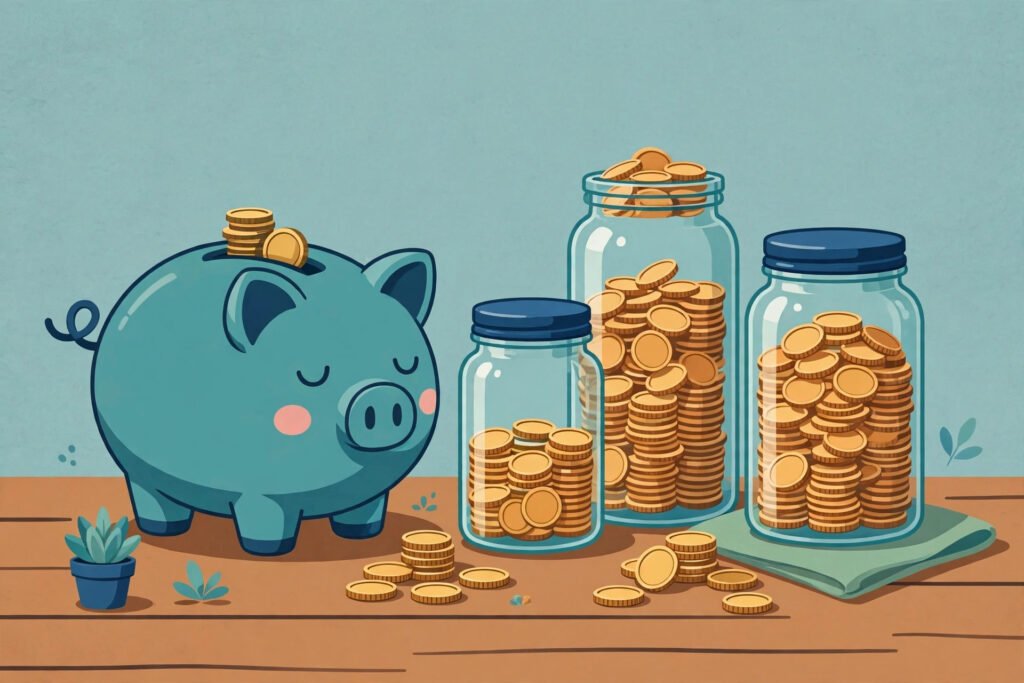
On payday, move a set amount into a separate savings account before you spend anything. Even a small amount counts. The habit matters more than the size. Over a year, small regular amounts grow into a real safety net.
Start with an emergency fund — enough to cover three to six months of essential costs. This fund is for real emergencies: a broken car, a lost job, a medical bill. It is not for holidays or sales. Keeping it in a separate account makes it harder to dip into for the wrong reasons.
Once the emergency fund exists, you can save for other goals: a deposit, a course, a business idea. Each goal gets its own pot, so you always know what the money is for.
Deal With Debt Before It Grows
Debt is the fastest way to undo good money habits. Interest charges quietly eat your income every month, and the longer a debt lasts, the more it costs. Managing money well means tackling debt before it grows.
If you have more than one debt, pick a plan. One popular method is to pay the smallest debt first for quick wins, then move on to the next. Another is to pay the highest-interest debt first, which saves the most money overall. Either method works — the best one is the one you will stick to.
Stop adding to the problem while you pay it down. That means no new borrowing for things you do not need. It also means talking to your lender if you are struggling. Many will agree to a lower payment or a pause if you ask early, before you miss payments.
Getting out of debt takes time, but every payment is progress. And once a debt is gone, the money you were paying becomes savings — a double win.
Spend With Intention, Not Impulse
Impulse spending is the enemy of managing money. It is not the big purchases that hurt most; it is the steady drip of unplanned buys. Managing money with intention keeps impulse buys in check.
A simple rule helps: wait 24 hours before buying anything that is not essential. If you still want it tomorrow, buy it. Most of the time, you will not. Online shopping makes this harder, so remove saved card details and unsubscribe from sales emails. A little friction goes a long way.
For bigger purchases, wait longer — a week or a month. Use the time to compare prices, read reviews, and check whether you already own something similar. The delay often saves you from a purchase you would regret.
This is not about never buying nice things. It is about making sure the things you buy are things you truly want, not things an advert made you want for five minutes.
Grow Your Money Slowly and Safely
Saving is step one. Growing your money is step two. Once your emergency fund is in place, your savings can start working harder — but slowly and safely. Managing money for growth starts with a solid emergency fund.
Learn the basics of investing before you put money in. Understand what shares and bonds are, and how capital markets move money from savers to businesses. Start with simple, diversified options rather than chasing hot tips. If something promises high returns with no risk, it is not a good deal — it is a warning sign.
Time is your biggest advantage. Money invested regularly over many years grows far more than money invested in a rush. Start small, keep going, and let time do the heavy work.
If investing feels confusing, get advice from a licensed adviser. A one-off session can save you from costly mistakes. Never take money advice from strangers online who are selling a course.
Managing Money: Check In Every Month
Managing money is not a one-time job. It is a habit, like checking your health. A short monthly check-in keeps small problems from becoming big ones.
Once a month, sit down for twenty minutes. Look at what came in and what went out. Check your savings. Look at your debts. Ask three questions: Did I stick to my plan? What surprised me? What will I change next month?
Celebrate progress. If you saved more than last month, notice it. If you paid off a debt, mark it. Money habits last longer when they feel rewarding, not punishing. Money habits like this make managing money feel rewarding.
Over time, these check-ins build confidence. You stop fearing your bank balance and start feeling in control. That feeling is the real goal of managing money — not wealth, but calm.
Frequently Asked Questions
What is the first step?
The first step in managing money is to track what you spend for one month. You need a clear picture of where your money goes before you can make a plan to improve it. Managing money starts with tracking, not guessing.
How much should I save each month?
A common guide is to save around twenty percent of your income, but any regular amount helps. If twenty percent is impossible right now, start with five percent and raise it when your income grows. The habit matters more than the number.
Is it hard on a low income?
Managing money on a low income is harder, but the same habits apply: track spending, plan the month, save a little first, and avoid costly debt. Small steps still make a real difference, and free advice services can help if you are struggling.
Should I pay off debt or save first?
Build a small emergency fund first, then focus on paying off costly debt. Without a buffer, every surprise pushes you back into debt. Once the debt is gone, redirect those payments into savings.
Where can I learn more about personal finance?
Your bank, a local advice service, or a licensed adviser can help with the basics. For a lighter break, free quiz games on Baamboozle are a fun way to test what you remember.
The Bottom Line
Managing money comes down to seven habits: know where your money goes, make a budget you can keep, save before you spend, deal with debt, spend with intention, grow your money slowly, and check in every month.
None of these habits is hard on its own. The power is in doing them together, month after month. Start with one habit this week — track your spending — and add the next one when the first feels easy.
Money will always be part of life. Managing it well does not make you rich overnight, but it does make life calmer, freer, and full of more choices. That is worth far more than a bigger pay cheque alone.
