
If you typed technology 7 into a search box, you were probably looking for a short list: the seven technologies that matter most right now. Not a history lesson, not a textbook, just the seven things worth knowing about in 2026.
That is what this guide is. Seven technologies, explained in plain words, with real examples and honest advice on which ones are worth your time. If you want the wider picture first, the top technology trends cover the same ground in more detail — this article is the short version.
Technology 7: The 7 Trends That Matter
The idea behind technology 7 is simple: instead of trying to follow everything, focus on seven. These seven were picked because they touch ordinary life, not just experts — the tools a student, a shopkeeper, a parent or an office worker will actually meet this year.
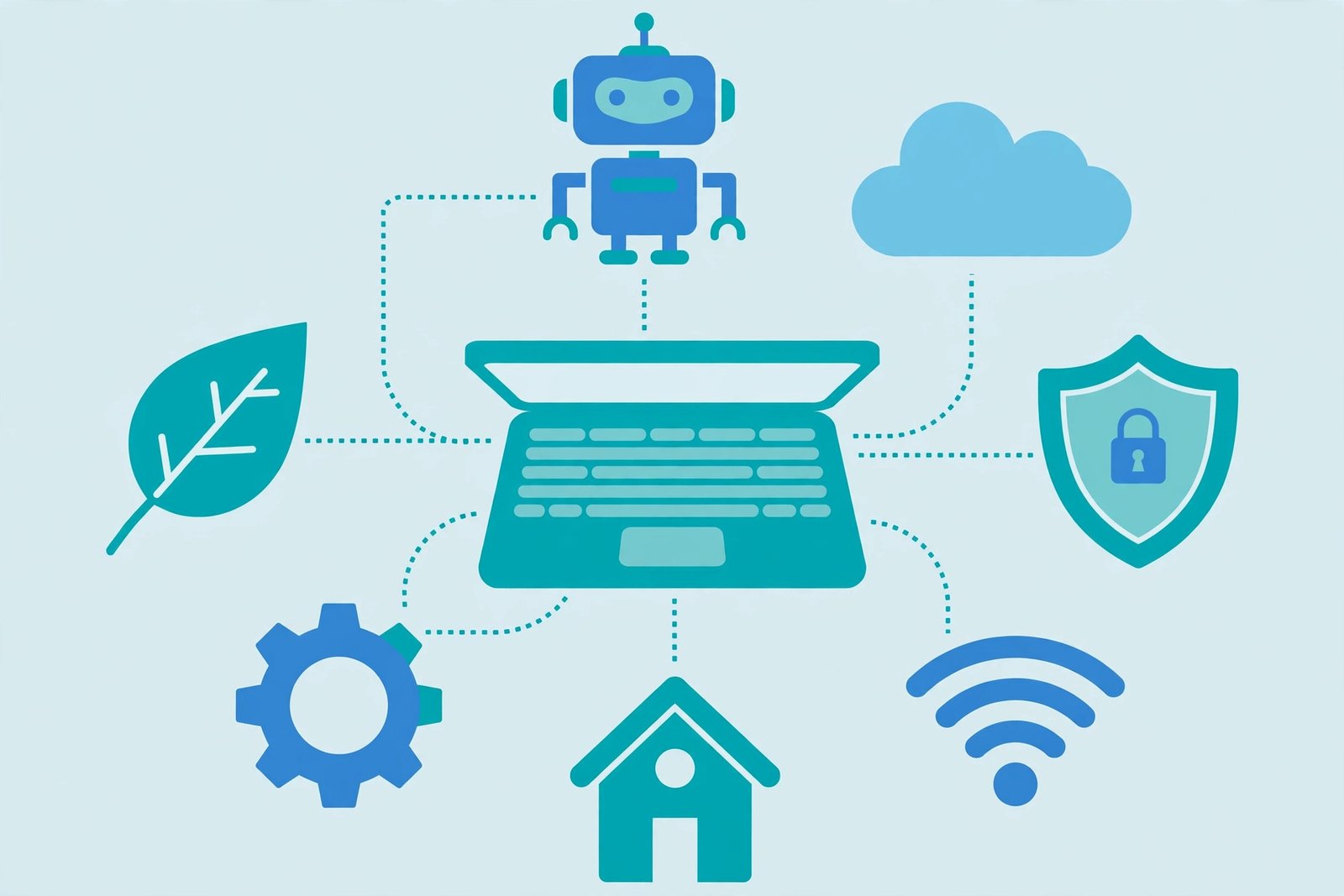
Here they are in brief: AI assistants, smart automation, cloud storage, fast connectivity, smart devices, everyday security, and green tech. The rest of this guide takes them one at a time. That is the technology 7 list in one line.
1. AI Assistants and 2. Smart Automation
1. AI assistants
An AI assistant is software you can talk to in plain language. You ask a question, and it answers. You give it a task, and it drafts the result. Students use assistants to plan essays and explain hard topics. Office workers use them to summarise long documents and draft emails. Parents use them to plan meals and help with homework.
The skill is not using the assistant — it is asking well and checking the answer. An assistant can sound confident and still be wrong, especially about facts, dates and numbers. Treat it like a helpful colleague: great for a first draft, never the final word without a check.
2. Smart automation
Automation means letting software do the boring, repeated jobs. A shop’s stock system orders more of a product when it runs low. An office program sends the same invoice every month without anyone remembering. A phone backs up your photos every night while you sleep.
The point of automation is not to replace people. It is to remove the chores so people can do the work that needs judgement. The best place to start is your own routine: find one task you repeat every week, and see if a tool can do it for you.
Both of these reward a calm approach. Start with one small task — summarise one document, automate one repeated email — and see how it feels. Small wins build trust in the tool, and trust is what turns a one-time try into a daily habit. That is how technology 7 earns its place in a daily routine.
3. Cloud Storage and 4. Fast Connectivity
3. Cloud storage
Cloud storage means your files live on secure computers elsewhere and sync to all your devices. Lose your phone, and your photos are still safe. Change laptops, and your documents are already there. For small businesses, it means no expensive servers in a back room — just an account that grows as the business grows.
The habit that matters is turning it on. Many people only discover cloud backup after they lose something. Set it up once, check it once a month, and you will never lose a file to a broken device again.
4. Fast connectivity
Fast internet used to be a luxury. Now it is the thing everything else depends on. Video calls, online classes, cloud backups, smart homes and streaming all need a connection that does not freeze or drop. 5G mobile and modern Wi-Fi have made that normal in most towns and cities.
If your connection is slow, the fix is often simple: move the router to a central spot, update it, or check whether your plan matches what you actually use. A fast connection makes every other technology on this list work better.
Together, these two are the foundation for the rest. Without a safe place for your files and a connection you can rely on, the smarter tools on this list cannot do their jobs properly. Get these two right first, and everything else becomes easier. They are the base that technology 7 builds on.
5. Smart Devices, 6. Security, 7. Green Tech
5. Smart devices
Smart devices are ordinary objects with sensors, software and a connection added: watches that track your health, speakers that play music on request, doorbells that show visitors, thermostats that learn your routine. They are now cheap enough for ordinary homes, and they are most useful when they remove a small daily annoyance — a light you always forget, a door you always check twice.
6. Everyday security
Security used to be an expert’s job. Now it is a habit for everyone: a password manager instead of one password everywhere, two-step sign-in on important accounts, and automatic updates switched on. These three habits stop most attacks before they start. It earns its place on the technology 7 list because it protects everything else on the list — a smart home without security is a risk, not a comfort. As more of life moves online, security is no longer the seventh item on a list — for many people it is the first.
7. Green tech
Green tech means technology that uses less energy or makes clean energy cheaper. Solar panels on roofs, smart meters that show what your home uses, and electric cars are the examples most people know. Less visible but just as important are the data centres that now run on renewable energy and the software that helps factories waste less. This trend matters because it decides whether the other six can keep growing without costing the planet.

How to Use Technology 7 in Your Life
Knowing the seven is easy. Using them well takes a little planning, so here is a simple way to start.
Pick one, not seven. Look at the list and ask which one would help you most this month. A student might start with an AI assistant for study. A small business might start with cloud storage. A family might start with a smart doorbell. One change at a time is how habits form. That is the simplest way to start with technology 7.
Learn it properly before adding another. Give the first tool two weeks of real use. If it saves you time, keep it and pick the next one. If you forget to open it, drop it — it was not solving a real problem.
Match the tool to your budget. Most of these seven have good free versions, and the paid versions are worth it only after the free one has proved itself.
It also helps to learn with someone else. A friend, a family member or a colleague who is trying the same tool can share tips and warn you about problems. Learning together is faster and more fun than learning alone, and it keeps you going when the first try feels confusing. Students in particular should start free: even a laptop can be a big purchase, so check a roundup of the best budget laptops for students before spending, and spend the money you save on the tools that matter.
Finally, keep the human part in charge. Set limits on screen time, check important facts yourself, and switch off when you need rest. Technology works best when you use it on purpose, not when it uses you.
Frequently Asked Questions
What does technology 7 mean?
Technology 7 is a search phrase people use when they want a short list of the seven technologies that matter most right now. This guide answers it with seven trends: AI assistants, smart automation, cloud storage, fast connectivity, smart devices, everyday security and green tech.
Which of the seven should I learn first?
Start with the one that solves your biggest daily problem. For most people that is an AI assistant or cloud storage, because both save time from the first day. That is the technology 7 way to choose.
Do I need to buy new devices for these technologies?
Usually not. Most of the seven run on the phone or computer you already own. Smart devices are the exception, and even there you can start with one cheap item, like a smart speaker or bulb. That is why technology 7 is easy to start.
Is green tech really one of the top seven?
Yes, because it shapes everything else. Cheaper solar power, smarter energy use and electric transport decide how fast the other technologies can grow, and they matter to every household’s bills. That is why technology 7 includes green tech.
The Bottom Line
So technology 7 is really a shortcut: seven technologies, one short list, and a simple way to stay current without drowning in news. AI assistants, smart automation, cloud storage, fast connectivity, smart devices, everyday security and green tech — that is the list for 2026.
Pick one, learn it well, and add the next only when the first one earns its place. That is how technology becomes useful instead of overwhelming. That is the technology 7 habit to keep.
- Seven technologies matter most in 2026: AI, automation, cloud, connectivity, smart devices, security and green tech.
- Start with the one that solves your biggest problem.
- Use free versions first and judge after two weeks of real use.
- Keep the human part in charge: check facts and switch off when needed.

1 Comment
Pingback: Where Technology Where: 7 Places Tech Shows Up Daily